How New York's Salt Air and Urban Pollution Destroy Your Home's Exterior (And What to Do About It)
If you live in Queens or Nassau County, your home is fighting a battle every single day — and it’s losing. Salt air rolling in from Jamaica Bay and the Atlantic, combined with New York City’s dense urban pollution, creates a corrosive cocktail that silently eats away at your siding, roof, concrete, and fences. Most homeowners don’t notice until the damage is already expensive.
How New York's Salt Air and Urban Pollution Destroy Your Home's Exterior (And What to Do About It)
This isn’t a standard “dirty house” problem. The Queens and Long Island environment is genuinely harsher on home exteriors than most parts of the country. Understanding what’s happening to your property and how to stop it can save you thousands of dollars in premature repairs and replacements.
The Two-Headed Threat: Salt Air + NYC Pollution
Queens is one of the most unique environments in the United States for homeowners. You’re close enough to the coast to get consistent salt-laden air, but you’re also surrounded by one of the most densely trafficked urban environments on the planet. That combination hits your home from two directions at once.
What Salt Air Does to Your Home
Salt doesn’t just make things look dirtier — it actively corrodes. When salt particles settle on your siding, roof, and metal fixtures, they attract moisture from the air and hold it against the surface. This accelerates oxidation on metal elements, causes paint to bubble and peel, and creates the perfect damp environment for mold, algae, and mildew to take root.
Vinyl siding, which is common throughout Queens and Nassau County, becomes brittle faster in salt-heavy environments. Brick and concrete absorb salt through tiny pores, and as temperatures fluctuate through New York’s brutal winters and hot summers, that salt causes microscopic cracks to widen — a process called spalling. Left untreated, your driveway, walkway, or stoop can go from slightly rough to visibly crumbling within a few seasons.
What Urban Pollution Does on Top of That
Layer the salt problem with NYC’s pollution diesel exhaust, industrial particulates, road dust from the Belt Parkway and the LIE, and airborne grime from millions of people and vehicles — and you have a surface contamination problem that builds up faster than most homeowners realize. This pollution fallout combines with moisture to form a grimy biofilm on your home’s exterior. Over time it discolors siding, darkens concrete, and creates a sticky surface layer that traps even more pollutants.
Roofs are especially vulnerable. Algae and black streaking that you see on Long Island roofs that dark discoloration many homeowners assume is just “aging shingles” is actually biological growth fueled by moisture, salt deposits, and organic pollution. It’s eating into your shingles and shortening your roof’s lifespan.
Surface-by-Surface: What's Being Damaged Right Now
| Surface | Primary Threat in Queens/Nassau | Signs of Damage | Recommended Treatment |
|---|---|---|---|
| Vinyl & Stucco Siding | Salt brittleness + mold growth | Green/black streaking, chalky texture | Soft wash house washing |
| Asphalt Shingle Roof | Algae, moss, salt moisture retention | Dark black streaks, granule loss | Low-pressure roof soft washing |
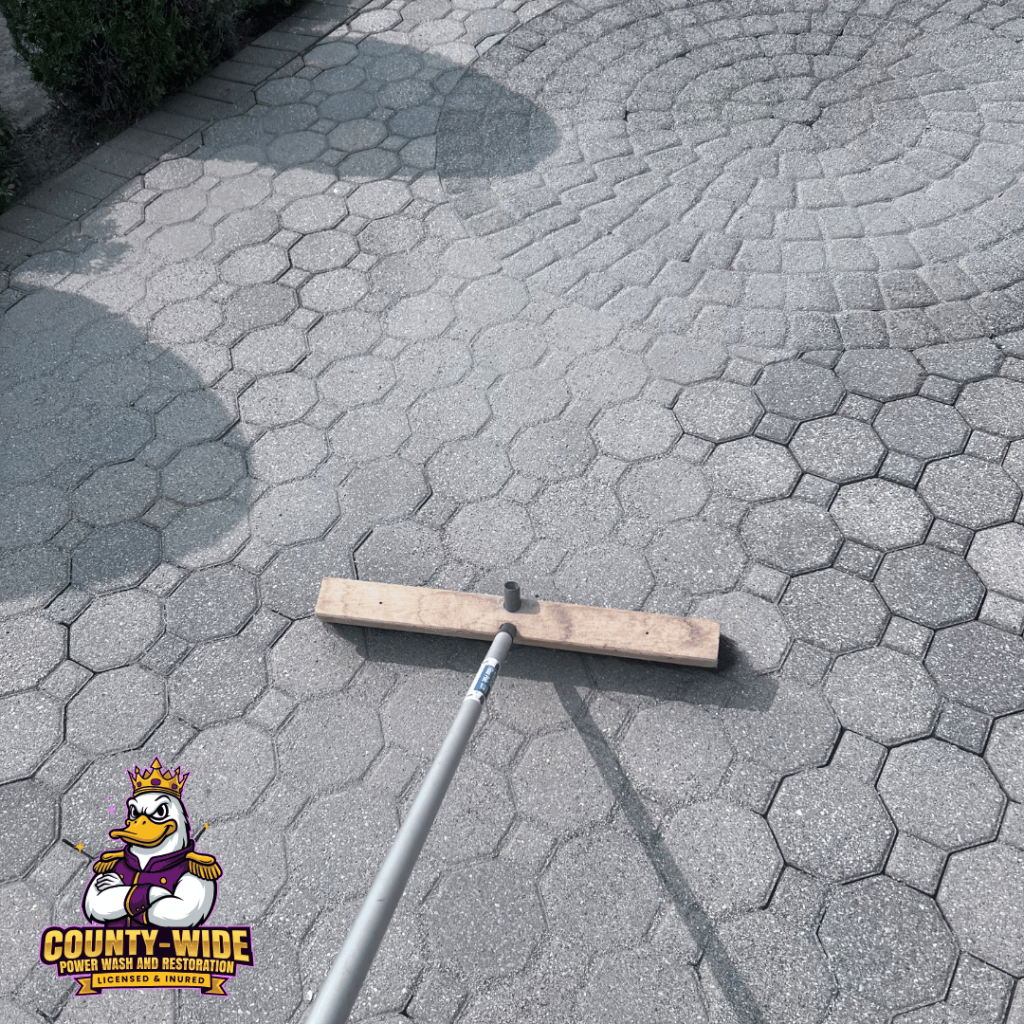
| Concrete Driveways & Sidewalks | Salt spalling + pollution staining | Pitting, dark stains, rough texture | Concrete restoration & pressure washing |
| Wood & Vinyl Fences/Decks | Moisture trapping, mildew, UV damage | Gray discoloration, soft spots | Fence & deck cleaning |
| Brick & Masonry | Salt crystallization (efflorescence) | White powder residue, crumbling mortar | Low-pressure masonry wash |
Why Standard Garden Hose Rinsing Doesn't Cut It
A lot of Queens homeowners try to stay ahead of this by hosing down their siding or rinsing off their driveways. It’s better than nothing, but it doesn’t address the core problem. Salt deposits and biofilm don’t simply rinse away with water pressure — they require the right combination of professional-grade cleaning solutions and controlled pressure or soft washing techniques to fully break the bond between the contaminant and the surface.
Using the wrong pressure or the wrong detergent can actually make things worse. Too much pressure on older vinyl siding can crack it. High-pressure washing on a roof can strip granules off shingles and void your warranty. This is why the right technique matters as much as the cleaning itself.
How Professional Power Washing Protects Your Home
A professional exterior cleaning done annually or twice a year if you’re in a particularly coastal part of Nassau County or near the water in Queens removes the accumulated salt, pollution, and biological growth before it can do lasting damage. It’s genuinely one of the highest-ROI maintenance tasks a Long Island or Queens homeowner can perform.
At County Wide Power Wash & Restoration, we use biodegradable, eco-safe detergents paired with the correct pressure and technique for each surface type. Soft washing for your roof and siding. Higher-pressure concrete restoration for driveways and walkways. The right tool for each job means your surfaces are clean without being damaged in the process.
Beyond looks, there’s a real financial argument here. A roof replacement in the Queens/Nassau area can run $10,000–$20,000 or more. A driveway replacement starts at several thousand dollars. Regular professional cleaning a fraction of those costs extends the life of those surfaces by years.
Why Standard Garden Hose Rinsing Doesn't Cut It
We serve Queens, Nassau County, Suffolk County, and surrounding Long Island communities. Get a free estimate today.
How Professional Power Washing Protects Your Home
How often should Queens and Nassau County homeowners get their exterior cleaned?
At minimum once a year, ideally in spring after winter’s salt and grime accumulation. Homes closer to the water Oceanside, Massapequa, Far Rockaway benefit from twice-yearly cleaning due to heavier salt exposure.
Is the black streaking on my roof actually algae?
In most cases, yes. The dark staining common on Long Island roofs is gloeocapsa magma, a type of algae that thrives in humid, salt-rich coastal environments. It’s not cosmetic — it feeds on your shingles and accelerates deterioration. Soft washing removes it safely without damaging your roof.
Will power washing damage my vinyl siding?
Not when done correctly. We use soft washing techniques for siding — lower pressure combined with professional-grade cleaning solution — which thoroughly cleans without cracking or warping vinyl. High-pressure washing directly on siding is a DIY mistake we often have to correct.
What's efflorescence and should I be worried about it on my brick?
Efflorescence is the white powdery residue you see on brick or concrete caused by salt crystals migrating to the surface. It’s a warning sign of moisture intrusion and salt damage. Professional masonry cleaning removes it and helps protect the surface going forward.
Do you use eco-friendly cleaning products?
Yes. All of our detergents are biodegradable and safe for plants, pets, and the environment — important given the proximity to waterways throughout Queens and Nassau County.